Guides
Farmers Market Vendor Costs: Booth Fees, Sales Tax and Card Processing
Farmers market vendor costs, from stall fees to sales tax and card processing, and what each one takes out of a Saturday's sales before the price is set.
What to take away
- A market vendor's cost stack is stall fees, sales tax, card processing, insurance and travel, and all of it lands before a price tag is written.
- Juried weekend pitches are quoted at $150 to $650 for a 10x10, while weekly market stalls cost a fraction of that. Treat every range here as illustrative.
- Sales tax is collected from the customer, not paid out of margin, and combined state and local rates run from about 6% to over 10%.
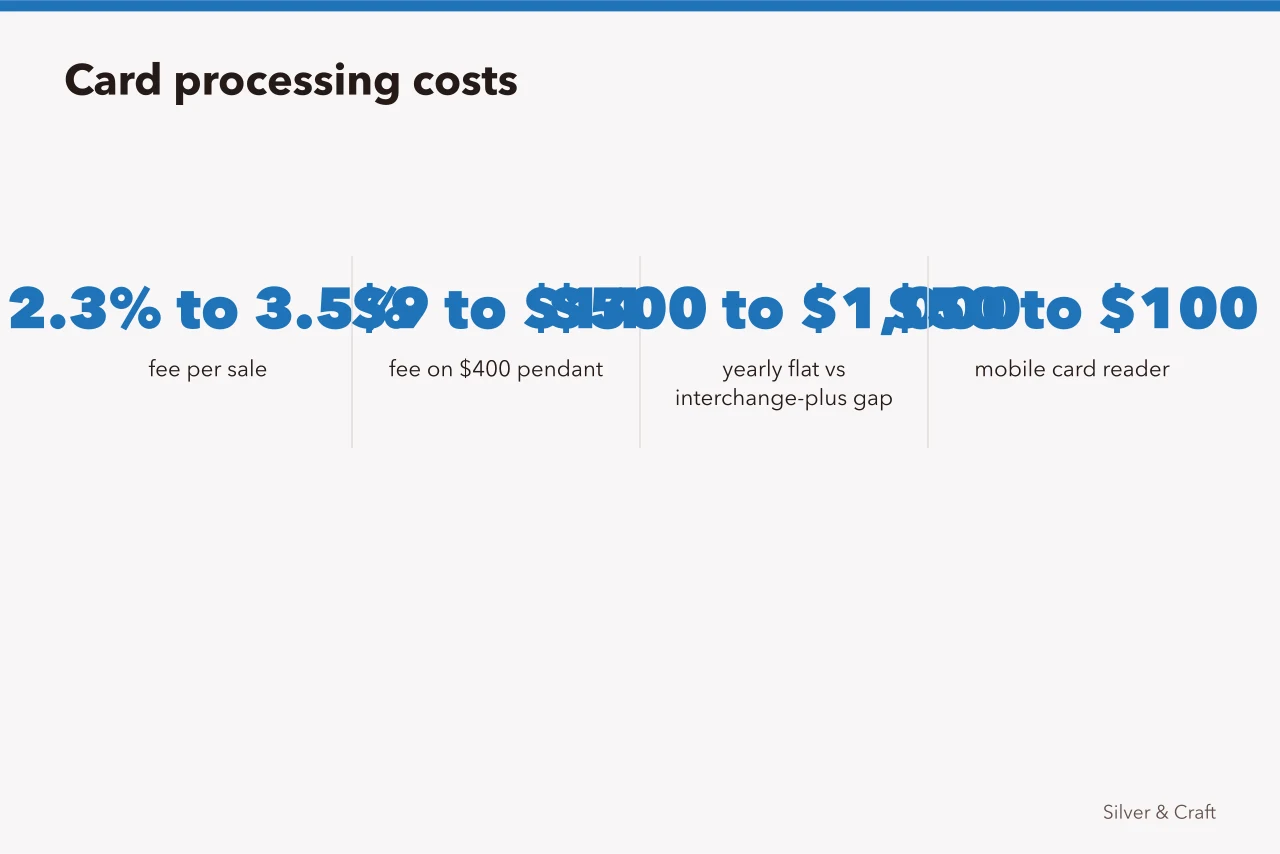
- Card processing takes 2.3% to 3.5% per sale, so a $40 basket gives up $0.92 to $1.40.
What a market season costs before the first sale
A vendor working two markets a week for thirty weeks has sixty selling days, not one event. Fixed costs repeat with every one of them.
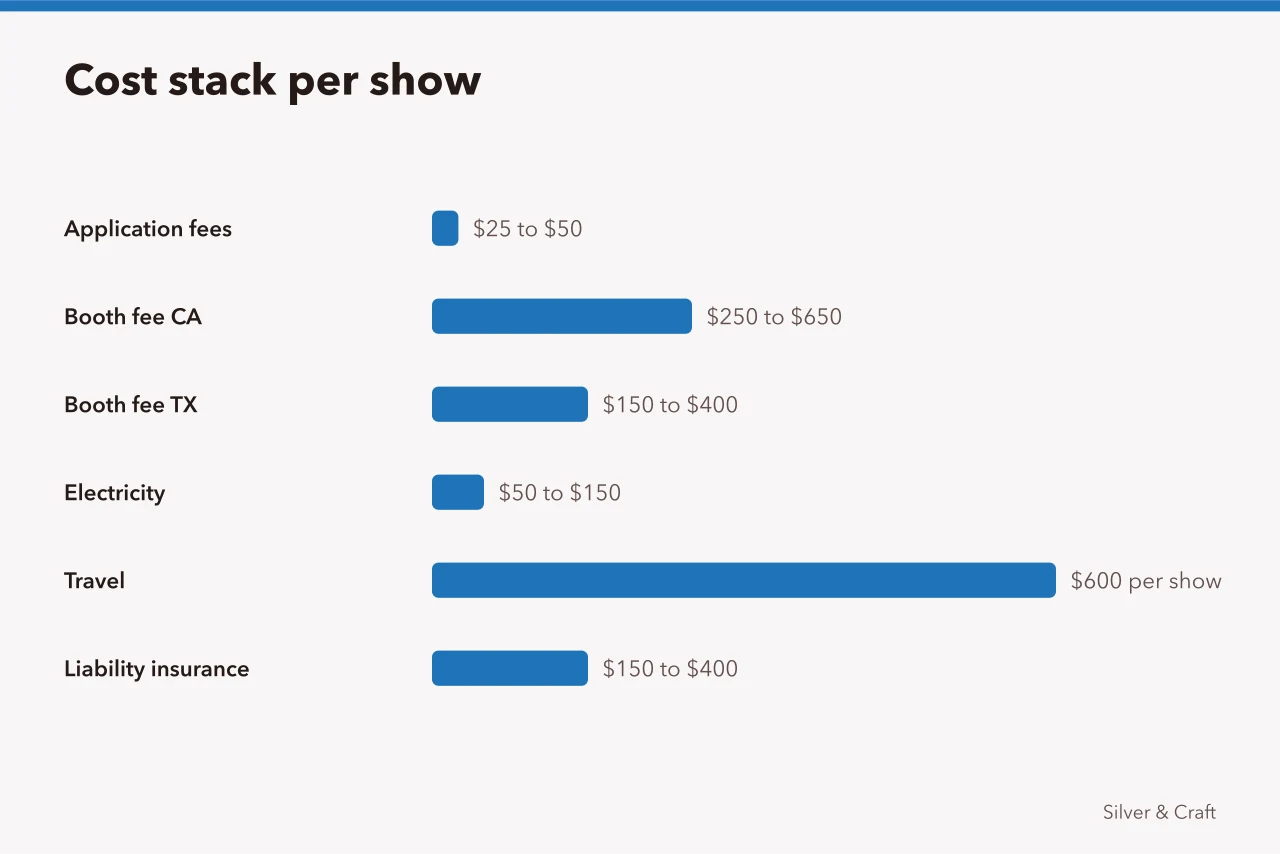
The stall fee is the first line, owed in rain and in a week when nobody stops. Application fees, market insurance and travel stack on top before the van is loaded.
Markets often require liability coverage. A small vendor business commonly pays $150 to $400 a year for a policy, though the figure moves with the state and the work.
Recording each fee the week it is paid is the habit that keeps prices honest. Cash flow for a farmers market vendor business sets out the books to keep and how to read them.
Booth fees at weekly markets and juried weekends
Stall pricing splits by format. A weekly market sells a recurring pitch to a regular crowd. A juried weekend festival sells footfall, and it charges for jury selection.
Typical fee
- Weekly market, single day
- $25 to $75
- Weekly market, full season
- $300 to $900
- Juried weekend show, 10x10
- $150 to $650
- Corner or double pitch
- Adds 15% to 25%
What the vendor gets
- Weekly market, single day
- One pitch, no jury
- Weekly market, full season
- The same pitch each week
- Juried weekend show, 10x10
- Higher footfall, jury fee
- Corner or double pitch
- Extra frontage and display room
Those are illustrative ranges, so confirm them with the market office before budgeting. A corner pitch or double space often adds 15% to 25%, and electricity for a cooler, scale or lighting adds $50 to $150.
Sales tax on market sales
Sales tax is collected from the customer and remitted to the state, so it never belongs to the vendor.
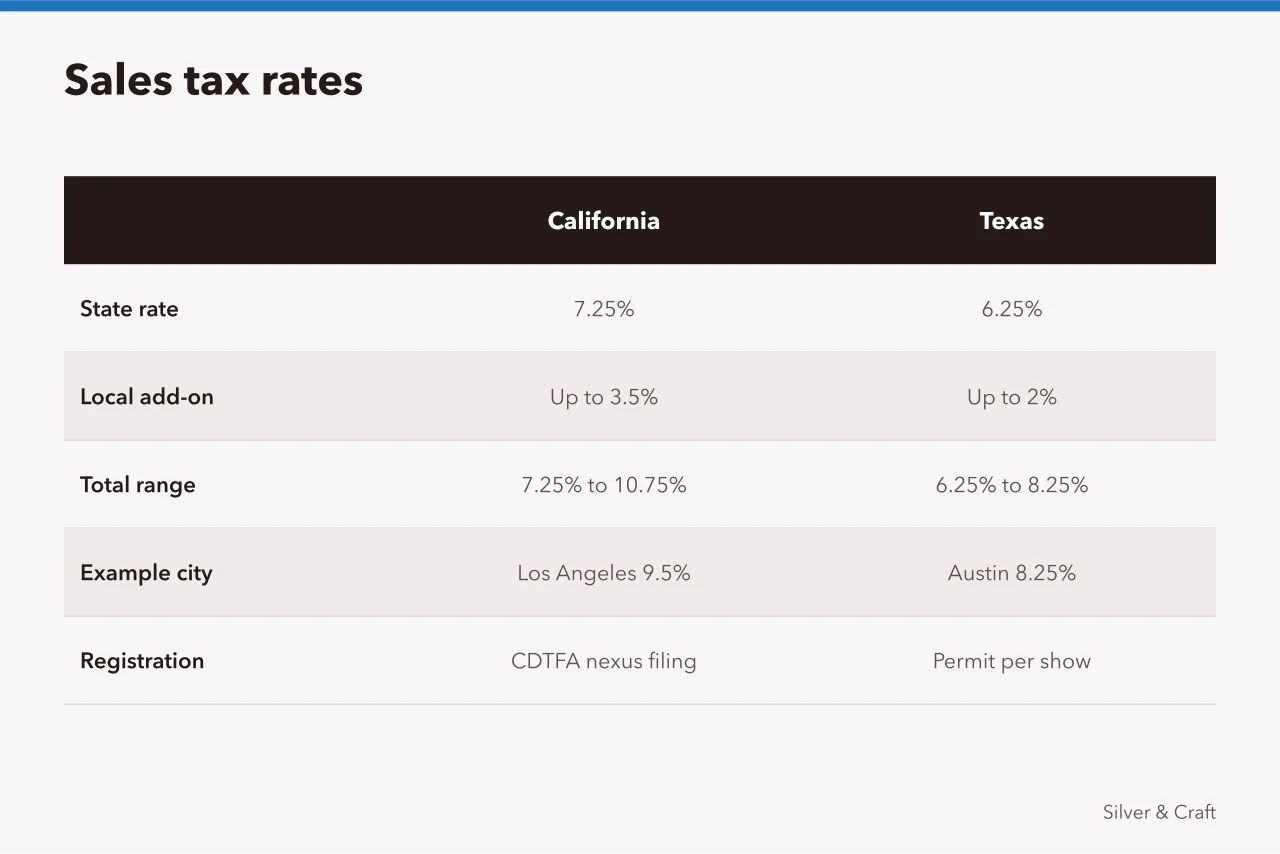
Texas charges 6.25% at state level, with local additions of up to 2%. California starts at 7.25%, and some districts push past 10.75%.
Selling at a market in another state can create a registration duty there. The IRS directory of state government websites leads to the right tax authority, and US Farmers Market Vendors' Sales Tax by State compares what each state asks of a stall.
A resale certificate removes tax from wholesale inputs, which is real money on a $2,000 supply order. The general mechanics appear in this overview of sales tax.
Card processing at the stall
Processing scales with sales. A $400 sale pays $9 to $14 at 2.3% to 3.5%, and a $40 basket gives up $0.92 to $1.40.
Hardware is a one-time cost with a monthly tail. A mobile reader runs $50 to $100, a countertop terminal runs $200 to $400, and cellular data for an outdoor stall adds $10 to $20 a month.
Markets that accept SNAP EBT run a separate payment rail with its own equipment. The USDA SNAP retailer page covers the application, and How to Accept SNAP EBT at US Farmers Markets explains the tokens and terminals at the stall.
Chargebacks are the sharp edge. A disputed $400 sale can cost the amount plus a $15 to $25 fee, and the vendor carries the burden of proof.
Example: pricing a $40 market basket
Take an illustrative vendor with $500 in fixed costs for the day and $12 of contribution per basket.
Pricing a $40 market basket
- Add the day's fixed costsstall fee, insurance share, travel and any electricity charge.
- Subtract sales tax and the card fee from the shelf price.
- Subtract the cost of goods to find contribution per basket.
- Divide the day's fixed costs by that contribution.
- Check that the break-even count sits well below a normal Saturday's volume.
That vendor needs about 42 baskets to break even. The pitch itself moves the number, and which farmers market booth layout sells more tests frontage and shopper flow side by side.