Guides
Canadian Cottage Food Rules for Farmers Market Vendors
Canadian cottage food rules for farmers market vendors vary by province. Ontario, BC, and Alberta each set their own approval paths for low-risk home-prepared foods.
What to take away
- Cottage food approvals in Canada sit with provinces, not one federal cottage food law.
- Ontario, BC, and Alberta each define which low-risk home-prepared foods may be sold at a farmers market.
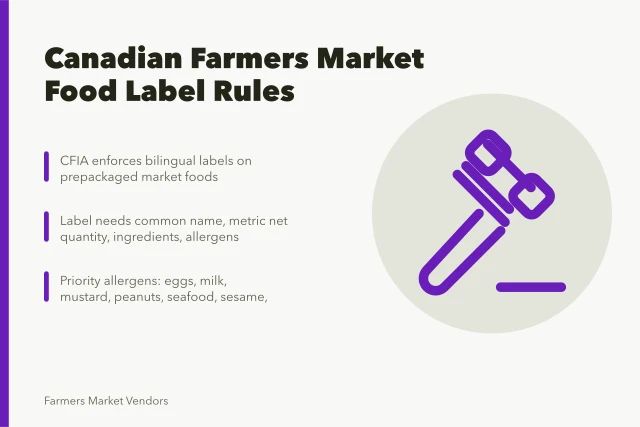
- A compliant label carries a common name, ingredients, allergen declarations, and a lot or batch marker.
- Selling unapproved or mislabelled food can lead to stop-sale orders, product seizure, and fines.
A farmers market vendor in Toronto, Vancouver, or Calgary faces a different set of cottage food rules than a vendor in the next province. The federal government sets some baselines, but the province and the local health authority decide what you may sell from a home kitchen. This split is why a national Canadian cottage food law would not work.
Who has jurisdiction
Canadian cottage food rules are provincial, not federal. The provinces and territories regulate food premises and public health under their own statutes. Municipal or regional health units enforce the provincial rules, so the same food can be treated differently in Ontario, BC, and Alberta.
Cottage Food Rules by Province
Ontario
- Regulator
- Local health unit
- Rule
- O. Reg. 493/17
- Approval
- Notify health unit
- Sales
- Direct at farmers markets
British Columbia
- Regulator
- Regional health authority
- Rule
- Food Premises Regulation
- Approval
- Temporary market permit
- Sales
- Temporary food market rules
Alberta
- Regulator
- Alberta Health Services
- Rule
- Alberta Food Regulation
- Approval
- AHS inspection or approval
- Sales
- Depends on market
Primary regulator
- Ontario
- Local public health unit under O. Reg. 493/17
- British Columbia
- Regional health authority under the B.C. Food Premises Regulation
- Alberta
- Alberta Health Services under the Alberta Food Regulation
What a low-risk home-prepared approval looks like
- Ontario
- Sellers must stick to the low-risk food list, notify the health unit, and sell directly at farmers markets
- British Columbia
- Vendors follow temporary food market rules or home-based low-risk guidelines from the health authority
- Alberta
- Low-risk home-prepared foods require an AHS inspection or market approval, depending on the market
This is why US cottage food laws do not transfer to Canadian stalls; the provincial frameworks decide.
What a home operation may and may not do
In Ontario, a home-based food business may sell low-risk foods such as breads, cookies, muffins, jams, and jellies. Pickles and similar acidified preserves may also qualify. It may not sell meat, dairy, eggs, seafood, or fermented sausages. Anything needing time and temperature control stays off the list. The local public health unit can require a written notification before your first market day.
Allowed vs Not Allowed Foods
Allowed
- Breads
- Yes
- Cookies and muffins
- Yes
- Jams and jellies
- Yes
- Pickles and acidified preserves
- May qualify
- Meat, dairy, eggs, seafood
- No
- Fermented sausages
- No
Not Allowed
- Breads
- No
- Cookies and muffins
- No
- Jams and jellies
- No
- Pickles and acidified preserves
- No
- Meat, dairy, eggs, seafood
- Yes
- Fermented sausages
- Yes
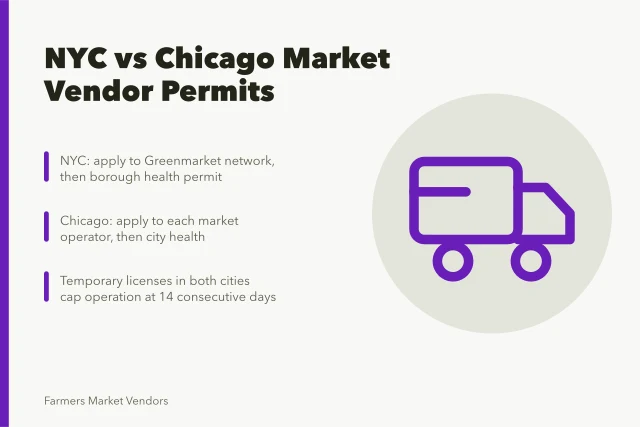
In British Columbia, a farmers market vendor from a home kitchen must usually operate under a temporary food market permit issued by the regional health authority. Low-risk baked goods, jams, jellies, and dry mixes are generally allowed; high-risk foods need a commercial kitchen. Health authorities may inspect the market stall, not just the home kitchen. If you later rearrange your stall, a guide on Booth Layout Sells More helps.
In Alberta, Alberta Health Services uses a low-risk home-prepared food guideline. A home kitchen can produce breads, cakes, cookies, jams, jellies, and similar shelf-stable foods, but dairy or meat fillings move the product out of the low-risk category. Some farmers markets require an AHS inspection sticker or approval letter before you can book a stall.
Labelling requirements
Label Requirements
- Common name of the food
- Ingredients in descending order of weight
- Net quantity
- Name and address of responsible person
- Allergen and gluten statements
- Lot or batch code for traceability
Health Canada's food labelling portal sets the federal baseline for prepackaged foods, including low-risk home-prepared items sold at markets. Labels on home-prepared items sold at a farmers market often must also include the producer's name and the market or permit number if the health authority requires it.
Records to keep
Records protect a vendor when a health authority asks for proof. Keep supplier invoices for each ingredient, batch or production date and volume, temperature logs for any cold holding at the stall, and copies of market or health unit paperwork. Without these, a recall or inspection becomes harder to defend.
Records to Keep
- Supplier invoices for each ingredient
- Batch or production date and volume
- Temperature logs for cold holding
- Copies of market approvals and notifications
- Health unit permit numbers
A farmers market vendor business keeps in stock the same ingredients and packaging, so a stock control checklist reduces waste.
What happens if you skip it
The consequence of skipping a cottage food approval is not a warning. In each province, a public health inspector can issue a stop-sale order, seize the product, and require disposal.
In Ontario, an inspector can order the food not to be sold and may follow up with a fine or summons. In BC and Alberta, repeated violations can lead to the market operator banning the stall and the health authority refusing future permits.
A single complaint about an undeclared allergen can trigger a recall that costs a vendor the season.
Tax obligations remain separate. See how to get GST/HST right as a Canadian farmers market vendor. Skipping provincial approval does not remove your federal tax obligations. A vendor above the small supplier threshold must still charge and remit GST/HST. CRA's GST/HST information for businesses explains collection and remittance.